Block Blast Tips for Beginners
Block Blast looks like the friendliest puzzle game on your phone. There is no timer, no opponent, and no way to make a wrong move in the first few seconds. Yet most new players lose their first games quickly, not because the pieces were unfair, but because the board quietly filled up in ways they never planned for. The good news is that Block Blast rewards a handful of simple habits, and none of them require fast fingers or a genius brain. Learn the basics in this guide and your scores will climb faster than any lucky streak could ever take them.
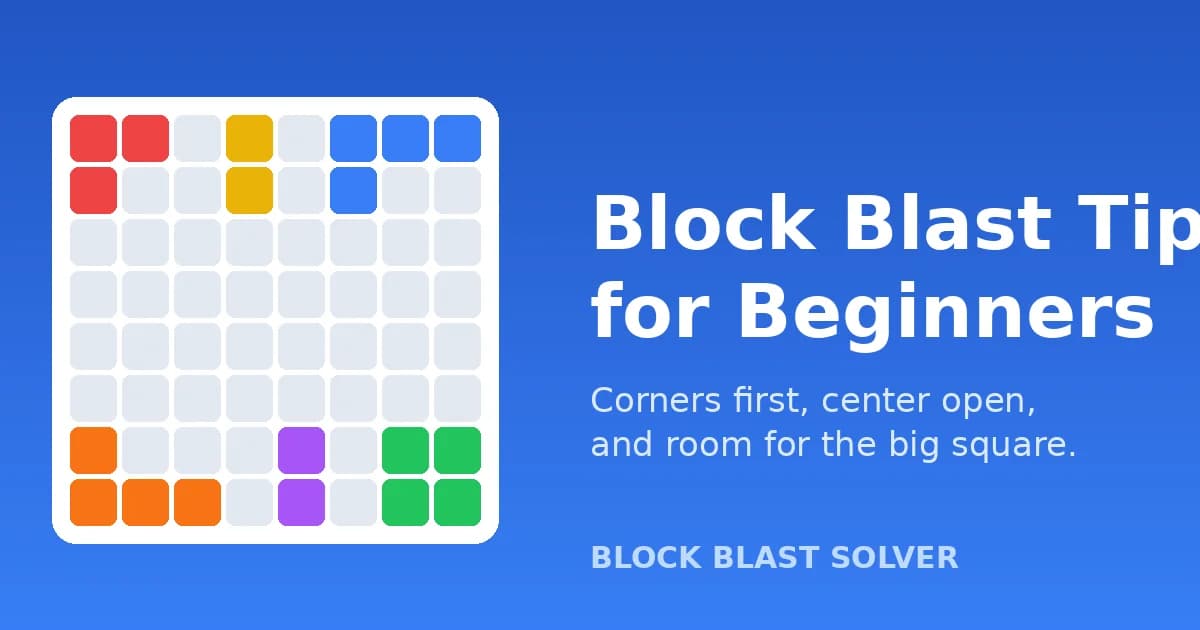
The Three Rules That Run the Whole Game
Everything in Block Blast comes back to three facts. Understand them properly and every tip in this guide will feel obvious, because each one is just these rules applied in a different situation.
- You place pieces, you never move them. Once a piece is on the board it stays there for the rest of the game, so every placement is a small permanent decision.
- A completely full row or a completely full column clears off the board. Both count, and clearing lines is the only way space ever comes back.
- You always work with a set of three pieces, and a fresh set only arrives once all three are placed. The game ends the moment none of your current pieces fits anywhere on the board.
That last rule surprises most beginners. You do not lose because the board is completely full. You lose because the specific pieces in your hand have no home left. A board can look half empty and still be dead if the empty cells are scattered in useless shapes. This is why good Block Blast play is really space management: keep your empty space gathered in useful shapes, and the game stays alive.
Start With Corners and Edges
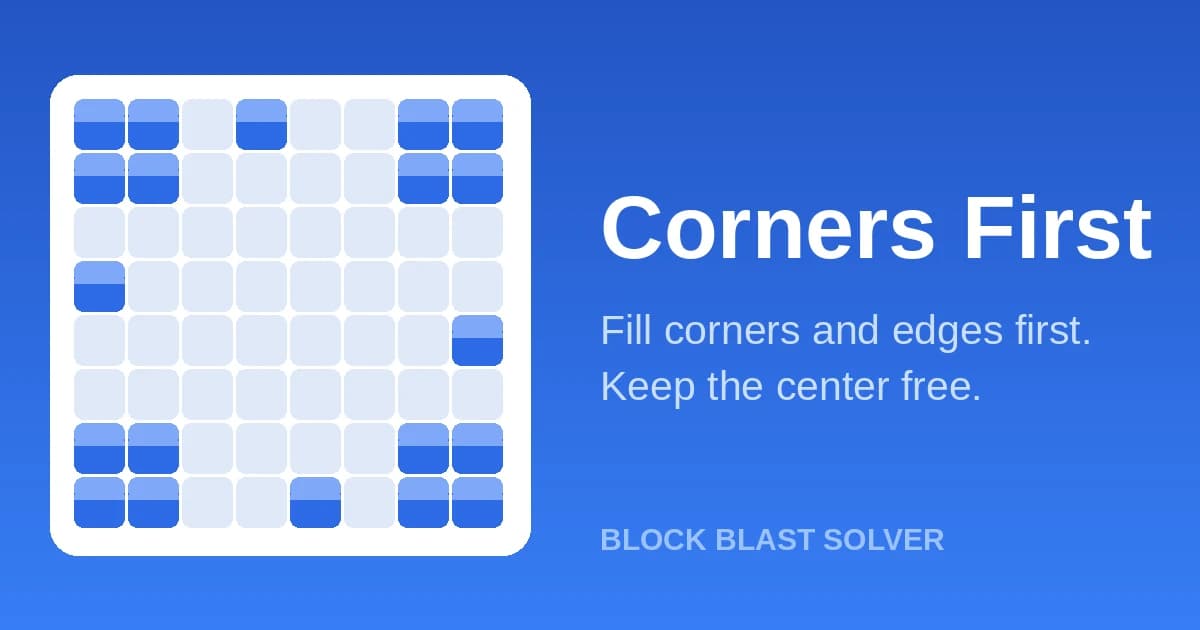
Corners are the hardest cells on the board to fill later, simply because very few pieces reach into them neatly. A corner that stays empty while the area around it fills up becomes a trap: only an L-shaped piece or the tip of a line can rescue it, and those pieces may never arrive in the order you need. Filling corners early, while the board is open, costs you almost nothing and removes the most awkward spaces from the game.
Edges work the same way. Pieces placed flush against a wall build clean rows and columns that are easy to finish later, and they keep the middle of the board free for big pieces. Beginners often do the opposite: they drop pieces wherever they fit in the center and work outward. That scatters small gaps everywhere, and small gaps are where games go to die. Think outside-in and your board will stay tidy almost by itself.
Keep the Center Open
The center of the board is the most flexible space you own. Long lines need it, big squares need it, and awkward shapes usually only fit there. When beginners scatter small pieces through the middle, they are spending their most valuable space on their least valuable pieces. Then the large pieces arrive, and there is nowhere for them to land.
Treat the middle like a runway you are keeping clear for incoming planes. Work the borders first, and only use the center when a placement there finishes a line or fits so neatly that it leaves no stray holes. If you do place something in the middle, place it flush against what is already there so rows still build toward a clear instead of a mess.
Always Save Room for the 3x3 Square
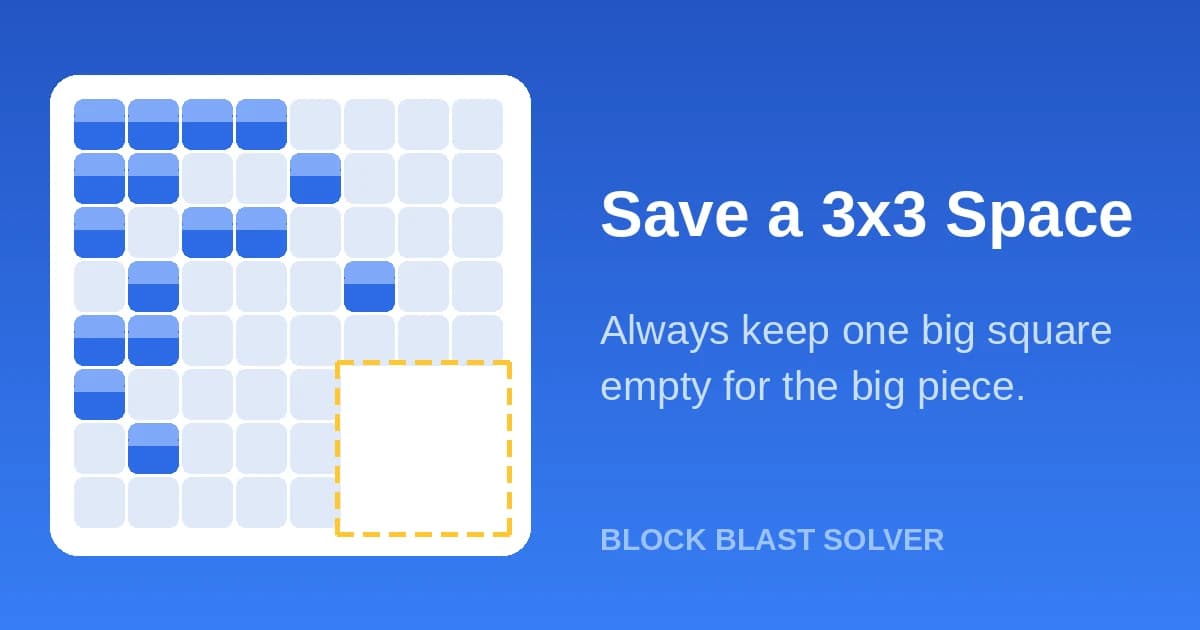
Ask experienced players which piece ends the most games and most will name the same one: the big 3x3 square. It needs a completely empty area three cells wide and three cells tall, which is a huge demand on a crowded board. More games end with this single piece homeless than with any other, often while the board still shows plenty of empty cells in ones and twos.
The habit that saves you is simple: keep one 3x3 zone of the board deliberately clean at all times. A corner region works well because you are filling corners and edges anyway. Guard that zone. Fill around it if you must, but do not drop stray blocks inside it unless a line clear will empty it again straight away. It feels wasteful to protect empty space while other areas crowd up, but that protected square of space is your insurance policy, and it pays out every single game.
Look at All Three Pieces Before Placing One
New players tend to grab the first piece that catches their eye and find it a home. The problem is that the three pieces in a set are a team, and the order you place them in changes what is possible. A spot that is perfect for your small piece right now might be the only spot your big piece could have used.
Scan all three pieces first and note their sizes and shapes before touching any of them.
Place the biggest or most awkward piece first, while the board still has open room for it.
Use the smallest pieces last, to plug gaps, finish lines, and tidy up what the big pieces left behind.
It also helps to think one step past the placement itself. A move that completes a row or column is usually worth taking, because cleared space is the most valuable thing in the game. The main exception is when that clear comes at the cost of your protected 3x3 zone. One cleared line is a small prize; a dead board ends the whole run.
Mistakes That End Most Beginner Games
A Simple Routine for Your First Games
Until these habits become automatic, run the same short checklist every time a fresh set of three pieces arrives. It takes ten seconds and it prevents nearly every beginner mistake in this guide.
- Is my 3x3 space still safe and completely empty?
- Can any of these pieces complete a row or a column?
- Which piece is the hardest to place, and where does it go first?
- Will this placement leave any single holes behind?
When a board still beats you, do not just restart and repeat the same habits. Upload a screenshot of the position to the Block Blast Solver and study the moves it suggests for that exact board. Watching where the solver places your pieces, and comparing it with what you would have done, is one of the fastest ways to train your eye. And once these basics feel easy, go deeper with our Block Blast Strategy Guide, which covers planning clears in advance and building the multi-line plays where the big scores live.
More Block Blast Guides
Ready to try it on your board?
Upload a screenshot and get the exact moves in seconds.
Open the Solver