How Combos Work in Block Blast
Play Block Blast for a while and a word starts flashing on screen after good moves: combo. The counter climbs, the points jump, and then a few quiet turns later it is gone, and most players could not tell you exactly what they did right or what made it disappear. Combos are one of the biggest scoring levers in the game, and also one of the least understood. This guide explains what a combo actually is, what keeps it alive, what kills it, and how to build your play around it without wrecking your board in the process.

What a Combo Actually Is
A combo is a streak of linked clears. Place a piece and complete at least one row or column, and the combo counter starts. Clear again and the counter climbs, with each clear worth more than the one before it. Between clears you get a small grace window: one or two placements that clear nothing will not kill the streak, as long as the next clear lands within three placements of the last one. The combo is not about any single spectacular move. It is about rhythm: never let three placements pass without a clear.
This is why experienced players talk about combos and multi-line clears as two different weapons. A multi-line clear is one placement that finishes two or more lines at once. A combo is a chain of clears linked closely together, with never more than two non-clearing placements between them. The two stack beautifully, since a multi-line clear also counts as a clear and keeps the streak alive, but they are built differently. Multi-line clears are built with patience on one turn; combos are built with preparation across several turns.
When the Streak Resets
The rule is simple, and the game even shows it to you: the glowing diamond behind your score is your combo meter. Clear a line and it burns bright. Place a piece that clears nothing and you have spent one of your two grace placements. Miss a second time and the streak is hanging by a thread. Place a third piece in a row that clears nothing, and the diamond disappears, the counter resets, and the next clear starts a brand new streak from the bottom.
This is the trap that catches most players. They spend both grace placements building a beautiful near-complete line, then discover the next piece in their hand clears nothing either, and watch the streak die on a turn that felt productive. The board improved, but the combo paid the price. Understanding that trade is the heart of combo play: every non-clearing turn spends from a budget of two, whether you meant to spend it or not. It is also one of the quiet reasons boards fall apart, something we break down further in Why You Keep Losing at Block Blast.
How to Build Combo-Friendly Boards
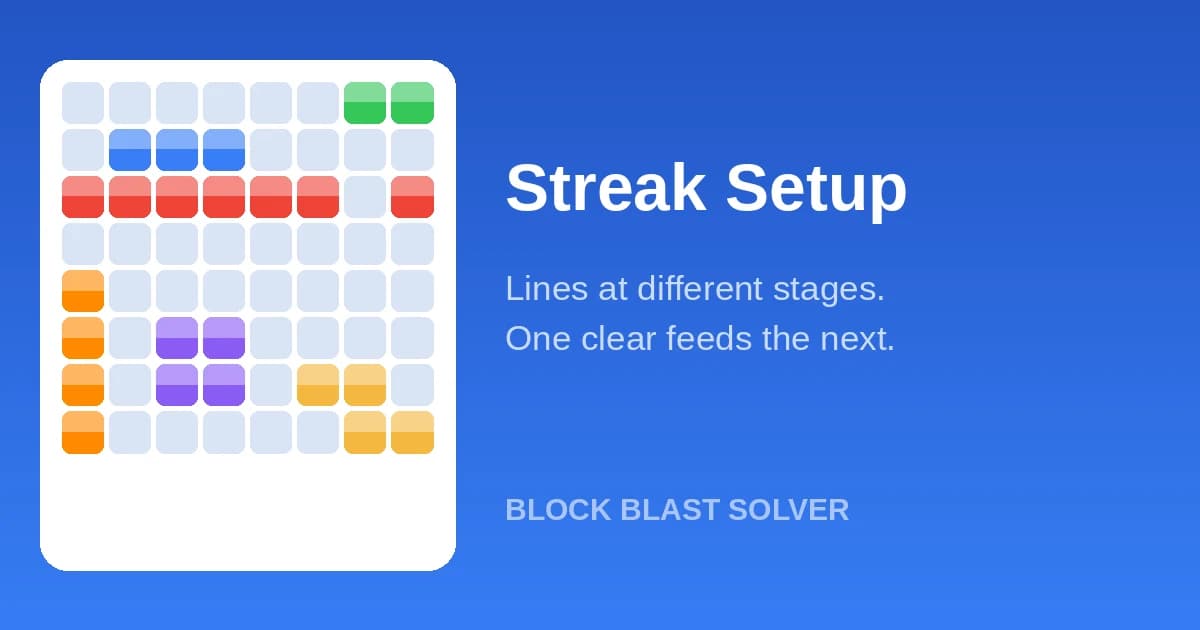
Combos are not found, they are manufactured. The method is to keep several lines at different stages of readiness at the same time: one line a single cell from complete, another two cells away, a third just starting. When you clear the ready line, the space it frees and the pieces that follow let you finish the next one, and the streak starts rolling. Think of it as a small production line where a finished clear is always coming off the end.
- Keep at least one line one cell away from complete at all times. That is your streak insurance: whenever the grace window runs low, you always have a clear ready to land.
- Build rows and columns that cross each other. A piece landing on the crossing point can complete both, and cross-clears are the easiest way to restart a streak with a bang.
- Feed the setup with awkward pieces first. Big and clumsy pieces go into building future lines; small pieces are your finishing tools.
- Watch what a clear leaves behind. The empty line it creates is where the next setup starts, so clear in places that open useful space.
The raw habits behind all of this are the same ones in our Block Blast Tips for Beginners: corners first, edges tidy, center open. Combo play is simply what those habits grow into once keeping the board alive stops taking all of your attention.
It also helps to know where the points land. The combo bonus grows as the streak climbs, which is why a fifth consecutive clear pays so much better than a first. Our Block Blast Strategy Guide shows how to fit that streak pressure into a full-game plan, so chasing the bonus never costs you the board underneath it.
Combo or Board: When to Let the Streak Die
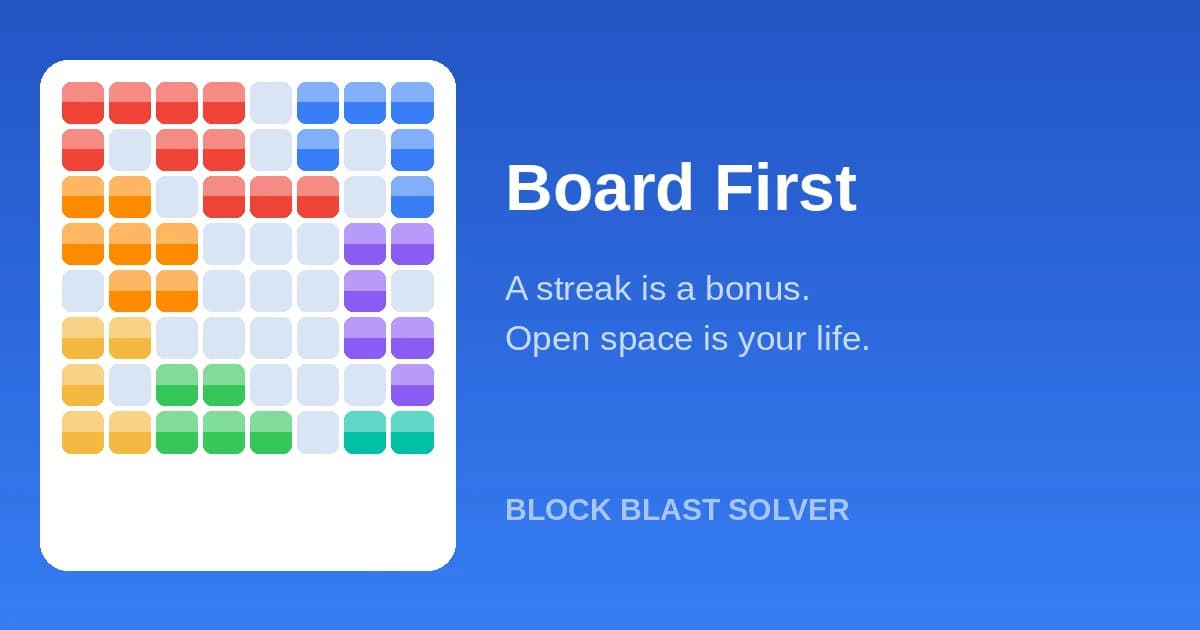
Here is the part most combo advice skips: sometimes the correct play is to let the combo die. A streak is income, but your board is your life. If the only way to keep a combo alive is a placement that blocks your protected 3x3 space, splits your open area into fragments, or buries a hole in the middle of the board, you are spending the whole game to save one turn's bonus.
The judgment call gets easier with one question: how long is this streak, and how long is my game? Early in a run, with a healthy board, protect the board every time, because a long game builds many streaks. Late in a run, when the board is nearly full anyway, a big combo can be the difference between a good score and your best score, and gambling a little space for it makes sense. What never makes sense is the accidental reset, the turn where the combo died and the board did not even improve. Kill your streaks on purpose, for a price, or not at all.
If you want to practice this deliberately, take a tangled position and run it through the Block Blast Solver before you move. Check whether its suggested placement clears a line, and if it does not, look at what the placement protects instead. That reasoning, streak versus space, is exactly the decision this guide is about, and seeing it made well a few dozen times builds the instinct faster than any rule list.
More Block Blast Guides
Ready to try it on your board?
Upload a screenshot and get the exact moves in seconds.
Open the Solver